
Monster Hunter Outlanders: A New Mobile Frontier for the Hunt
- Nov 01, 2026
- 0
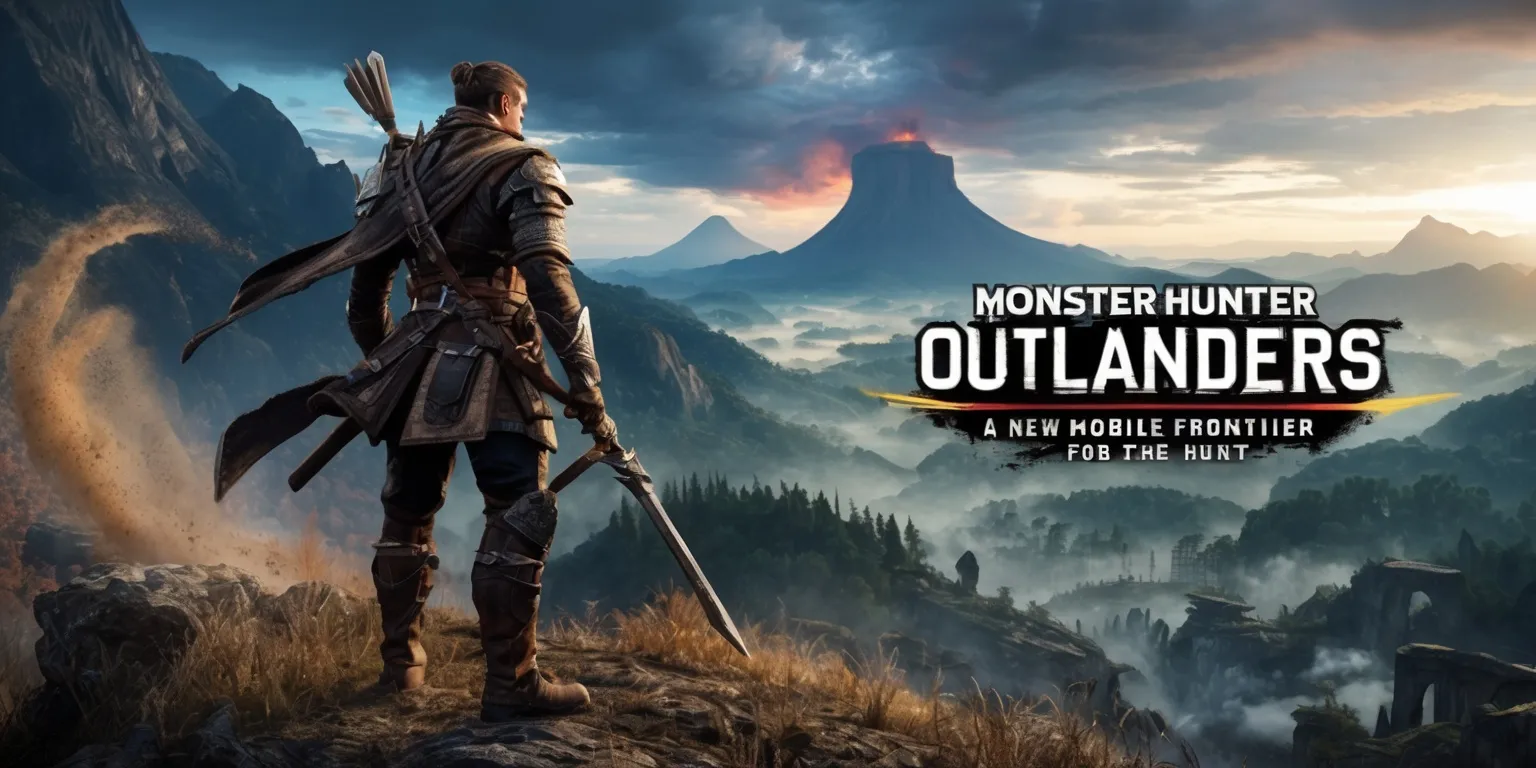
Monster Hunter Outlanders brings a familiar hunting spirit to mobile while reshaping that experience for a touchscreen audience that may never have touched the main series before. It places players in a broad wilderness called Aesoland and asks them to read monster behavior, prepare their loadouts, gather materials, and adjust to evolving circumstances instead of merely rush from one fight to the next. What what makes it distinctive is not just that it carries the identity of a full Monster Hunter entry, but that it also tries to preserve the tension, planning, and discovery that define the franchise. At the same time, it remains designed to be approachable on a phone, which means its systems are trimmed and rearranged in ways that invite comparison with Monster Hunter Now, Wilds, Rise, and other mobile action games.
A mobile hunt that aims beyond quick sessions
Unlike many mobile titles built around short bursts and simplified loops, Monster Hunter Outlanders wants players to settle into a larger adventure. The structure a more classic action role-playing game style than to a location-based game, and that shift affects nearly every part of the experience. Instead of stepping outside to chase creatures in the real world, players move through a crafted environment full of terrain features, threats, and exploration goals. That gives it a much more authentic feel, like a complete outing than a side activity. The game is clearly trying to communicate that it is not a light companion app or a puzzle-based spin-off, but a genuine Monster Hunter experience recast for portable play.
Aesoland as a living hunting ground
The setting of Aesoland gives the game a a feeling of place that extends far beyond a basic backdrop. It is presented as a wide wilderness with regions that invite travel, scouting, and preparation. The environment is not there only to look dramatic; it influences what the player brings, how long they can stay out, and how they approach each encounter. Heat, cold, weather shifts, and the gradual progression of time all play a role in the feeling that the world is active rather than static. That matters because Monster Hunter has always been partly about learning the land as much as learning the beasts. Here, the map layout, the terrain, and the conditions around you become part of the hunt, reinforcing the idea that success depends on reading the environment carefully.
Adventure mode trims the edges for easier entry
For players who want something more immediately digestible, Adventure mode offers a streamlined version of the combat and exploration loop. It does not abandon the core hunt-and-react rhythm, but it makes the action easier to absorb on a smaller screen. Monster behavior remains readable, attacks are heavily signaled, and the focus stays on dodging, positioning, and striking when the opening appears. This mode feels especially useful for people coming from Monster Hunter Now, where the combat already emphasizes quick reads and efficient decisions. Adventure mode may be the softer path, but it still preserves enough of the series’ tactical flavor to keep fights from turning into simple button tapping. It is a practical bridge into the broader game.
Classic mode reaches for the mainline feeling
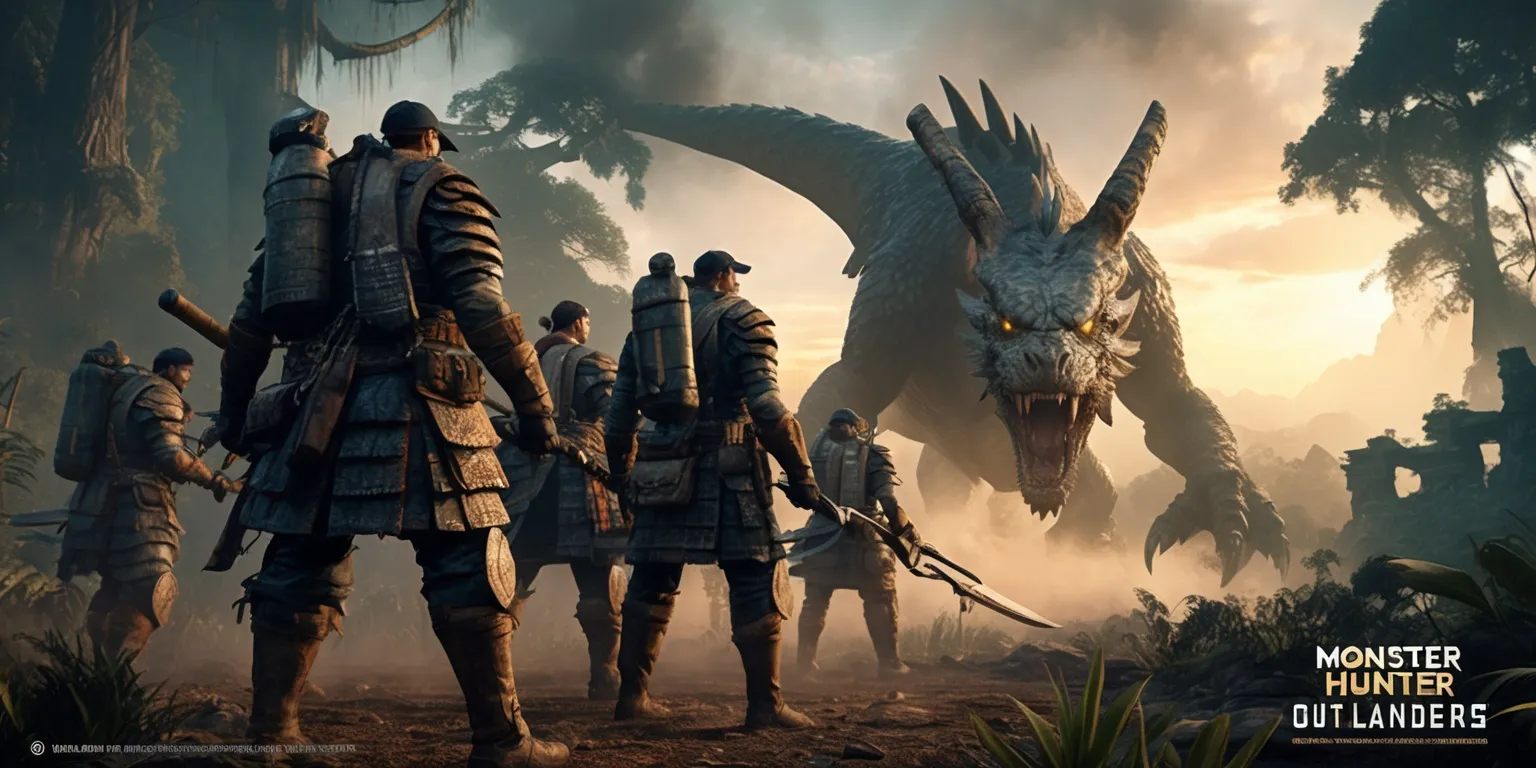
Classic mode is where Monster Hunter Outlanders makes its boldest claim. This mode shifts toward the style long-time fans associate with the main series, offering controls and combat expectations that feel more layered and deliberate. Unlike the more guided approach in Adventure mode, it strips away many hints and attack prompts, so the player must interpret monster motion, rhythm, and distance with greater care. The result is a difficulty curve that feels closer to traditional Monster Hunter design. It is a mode that asks for patience, repeated learning, and a willingness to make mistakes while mastering the flow. On a touchscreen, that can be challenging, yet it is also what makes the game much of its identity.
Combat that rewards observation rather than rush
The actual fighting in Monster Hunter Outlanders is built around targeted responses instead of unfocused aggression. Even in the simpler mode, players are encouraged to identify vulnerable points and act with purpose. When a monster is staggered or exposed, the game opens a path for stronger attacks, making timing a central part of the experience. The lock-on system helps keep attention where it belongs, allowing players to track movement without losing sight of the target. That design makes combat feel more thoughtful than many mobile action games, which often rely on broad swipe-heavy offense. Here, awareness matters. A reckless approach tends to create trouble, while a patient one lets the player respond to openings and manage the fight with far more confidence.
Preparation matters as much as the confrontation
Outlanders treats preparation as an essential part of the hunt, not filler between battles. Players gather resources, craft useful items, and build out their equipment before heading deeper into the field. Medicine and other recovery tools play a significant role, and fights may require a retreat or pause rather than nonstop pressure. This changes the overall rhythm in an important way. The game is not only asking whether you can handle a monster in the moment; it is also asking whether you came ready for the conditions ahead. If you venture into extreme climates or unfamiliar regions without the proper supplies, the wilderness becomes harder to manage. That layered preparation gives the game a stronger sense of survival and planning.
Field events and exploration shape the pace
One of the more interesting elements in Monster Hunter Outlanders is how exploration and field events support the main loop. The world is not just a corridor leading to a target. There are moments of movement, discovery, and region-specific activity that make travel feel meaningful. Ziplines and similar tools can alter traversal in ways that reward smart route planning, while climbable surfaces and layered terrain encourage vertical movement. These touches help the game avoid feeling flat or overly repetitive. They also create points of comparison with other action RPGs that emphasize roaming across large spaces. In that sense, Outlanders borrows from familiar open-world design patterns while still keeping the hunt-centered structure at its core.
Comparable to other Monster Hunter experiences, but adjusted for handheld play
When set beside Wilds and Rise, Monster Hunter Outlanders feels like a cousin rather than an imitation. It borrows the series’ obsession with tracking, monster study, and gear preparation, yet it reshapes those ideas for touch controls and mobile pacing. The core fantasy remains intact: observe, adapt, prepare, and strike with purpose. What changes is the way those elements are delivered. Instead of long sessions Whether on a console or a PC, the experience is condensed into a format that can be played in a more flexible setting. That flexibility does not erase depth. It simply redistributes it, placing more weight on menu management, encounter efficiency, and careful execution within a smaller control space.
How it differs from Monster Hunter Now
Compared with Monster Hunter Now, the differences are immediate and important. Now is rooted in augmented reality and the real world, with movement tied to your location and progression shaped by where you go physically. Outlanders removes that layer entirely and replaces it with a more conventional adventure structure. That means less dependence on real-world movement and a stronger focus on a hand-crafted game world. The combat also feels more involved here, especially when you step into the stricter mode. For players who enjoyed Now but wanted a fuller fantasy setting, more freedom in exploration, and a stronger sense of immersion, Outlanders might seem like the obvious next move. It preserves some streamlined combat ideas while building a much broader framework around them.
Movement tools and vertical routes add strategy
Traversal in Monster Hunter Outlanders is more than simply shifting from one field to another. The inclusion of movement tools changes how players think about distance, elevation, and access. Ziplines and other aids let you navigate terrain with intention, which means exploration can be planned rather than improvised every time. Vertical routes become part of the route-finding puzzle, and that gives the wilderness more character. Instead of treating the map as a flat hunting space, the game encourages a layered approach to travel. This works especially well in a mobile setting, where clear navigation tools can prevent the world from feeling cumbersome while still preserving the feeling of scale that Monster Hunter fans expect.
A visual style built around clarity and atmosphere
From an aesthetic standpoint, the game appears designed to balance readability with atmosphere. Monster Hunter has always relied on strong creature silhouettes, environmental contrast, and clear combat feedback, and Outlanders carries that approach into a portable format. That is important because touchscreen play demands quick recognition. Players need to see where a monster is facing, when an attack is coming, and where the safest movement path lies. At the same time, the world still needs enough visual richness to feel like a place worth exploring. The result is a presentation that likely favors clean outlines, dramatic landscapes, and strong visual signals over clutter. This makes the game feel approachable while still supporting the mood of a dangerous, untamed frontier.
Why the game feels more technical than many mobile action RPGs
Many mobile action RPGs drift toward simple chaining of attacks with little demand for precision. Monster Hunter Outlanders pushes in a different direction by making targeting, timing, and resource management central to the experience. That gives its combat a more technical identity, even when the controls are adapted for a smaller device. Players are not just watching numbers rise; they are making decisions about when to press forward, when to recover, and where to focus damage. The need to identify weak points and respect monster behavior makes each encounter feel more deliberate. For players who have grown tired of overly automatic combat systems, that added texture can be a major appeal and a reason to keep returning to the hunt.